[ News and Blog ]
How to Rank in AI Search Results in 2026
|
AI SEO & Search Systems

Arpan Sharma
AI Search & Marketing Systems
Learn how to rank in AI search results in 2026. Discover how AI systems select content and how to structure your blog for visibility and citations.
Ranking in search no longer means being #1 on Google.
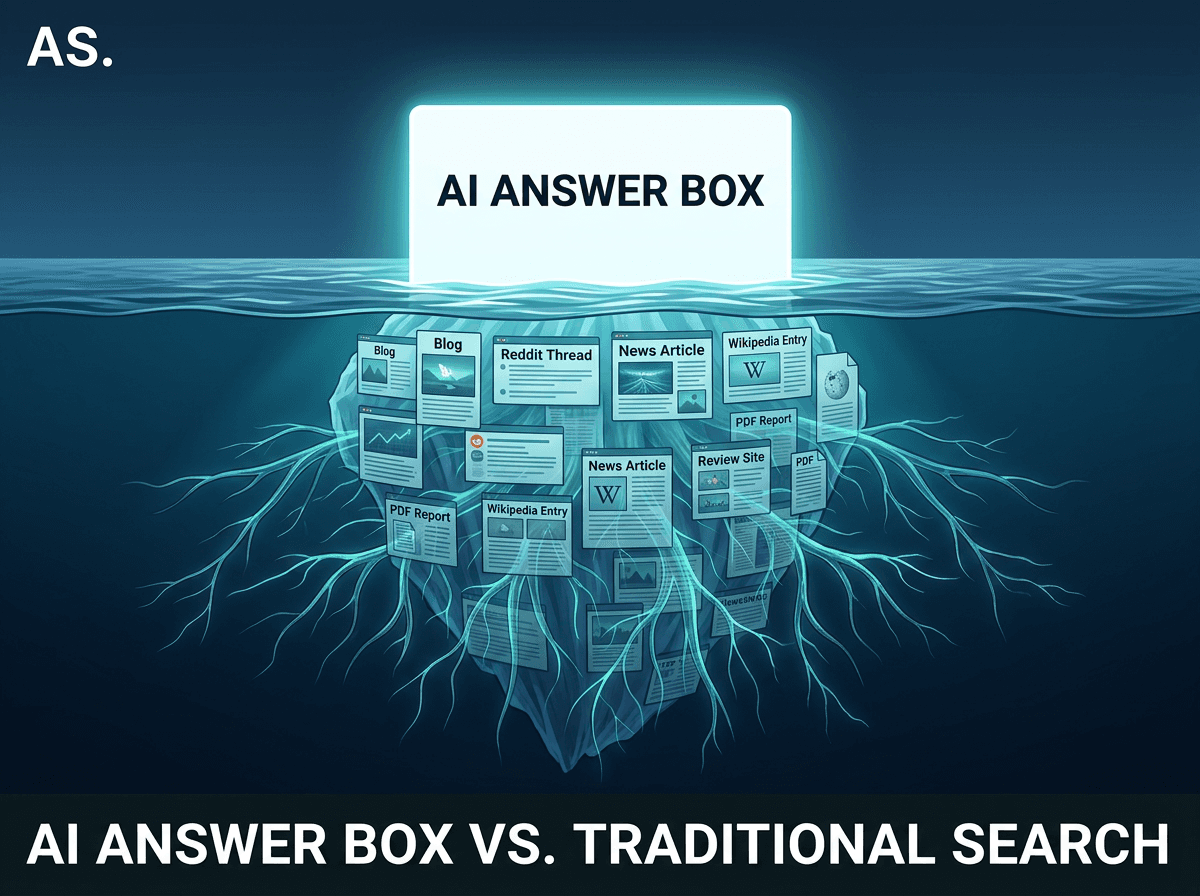
It means being included inside AI-generated answers.
Platforms like ChatGPT, Perplexity AI, and Google’s AI Overviews are changing how visibility works.
Users are not clicking 10 links anymore.
They are reading one answer.
Your goal is simple:
👉 Make your content part of that answer
What “Ranking” Means in AI Search
Traditional SEO:
rank on page
get clicks
AI search:
get selected
get cited
get trusted
This is a different game.
You are not optimizing for position.
You are optimizing for inclusion and clarity.
How AI Search Systems Choose Content
AI systems follow a simple pattern:
scan multiple sources
extract structured insights
combine into one response
cite relevant sources
If your content is:
hard to read
poorly structured
too generic
It gets ignored.
1. Answer Questions Directly
AI systems prioritize clear answers, not long introductions.
What to do:
Start sections with direct statements.
Example:
Bad:
“SEO has evolved a lot over time…”
Better:
“AI search selects content that is structured, specific, and topically relevant.”
Use formats like:
definitions
step-by-step answers
short explanations
This improves your chances of being picked.
2. Structure Content for Extraction
AI systems extract information in chunks.
If your content is messy, it won’t get used.
Use:
H2 and H3 headings
bullet points
short paragraphs
clear sections
Example structure:
What is AI SEO
→ short definition
How it works
→ steps
What to do
→ actionable list
Clarity wins.
3. Build Topical Authority (Not Just Pages)
AI systems evaluate your entire site, not one article.
If you only have one post on AI SEO, you are weak.
If you have:
GEO basics
LLM SEO strategy
AI keyword research
internal linking strategy
You become a reliable source.
👉 This is why your cluster matters.
4. Use Internal Linking to Build Context
Internal links tell AI systems:
what your content is about
how topics connect
Every article should:
link to your pillar
link to related posts
Example:
Without this, your content stays isolated.
5. Write Specific, Not Generic Content
Generic content does not get cited.
AI systems prefer:
specific insights
clear frameworks
practical breakdowns
Example:
Generic:
“Use AI for SEO”
Specific:
use AI to cluster keywords by intent
use AI to identify content gaps
use AI to improve internal linking
Specific content gets selected.
6. Optimize for Intent, Not Just Keywords
Keywords still matter, but intent matters more.
Tools like SEMrush help you find keywords.
Your job is to map them to:
informational
commercial
action-driven
Example:
“best AI SEO tools” → commercial intent
That should connect to your services.
7. Keep Content Updated and Relevant
AI systems prefer fresh, refined content.
Every 30–45 days:
update sections
improve clarity
add new insights
refine structure
SEO is not publish and forget.
8. Build Trust Signals Across Your Site
AI systems evaluate credibility.
This includes:
consistent topic coverage
clean site structure
clear authorship
helpful content
The more consistent you are, the more likely you are to be cited.
Common Mistakes to Avoid
1. Writing for keywords only
Leads to shallow content.
2. Ignoring structure
Makes extraction difficult.
3. Publishing random topics
Breaks authority.
4. No internal linking
Kills context.
Simple Framework to Rank in AI Search
If you want a practical approach:
choose one topic
create one pillar article
write 5–8 supporting posts
interlink everything
update regularly
This is enough to start showing up in AI answers.
Also Read: AI SEO Tools and LLM Strategy For 2026
Where This Fits in Your Strategy
GEO → explains the shift
LLM SEO → explains how systems work
This → shows how to win visibility
Next layer:
👉 execution and tools
The Opportunity Right Now
Most businesses are still chasing rankings.
Very few are optimizing for AI search.
That gap is where you win.
FAQ
How do I get my content cited in AI search results like ChatGPT or Perplexity?
AI systems cite content that directly answers the question being asked, is clearly structured with headings, and comes from a site that has established authority on the topic. The most practical steps are: write posts that answer one specific question very well, use clear H2 and H3 headings that match how the question would be phrased, build internal links between related posts so AI systems understand your topical coverage, and publish consistently on a narrow subject area rather than broadly.
Does Google ranking still matter if I want to appear in AI search results?
Yes — there is significant overlap. Content that ranks well on Google tends to be the same content AI systems use as reference material, because both reward depth, clarity, and topical authority. However, AI search has its own additional requirements: structured answers, entity clarity, and citation-ready formatting that Google does not explicitly reward. Think of Google ranking as the foundation and AI search optimisation as the layer on top.
How often should I update blog content to stay visible in AI search?
Review each key post every 60–90 days. Updates don’t need to be rewrites — often a few targeted additions are enough: a new FAQ pair, updated statistics, a section that addresses a question you’ve seen readers ask, or a link to newer content in your cluster. The signal that matters is that the page was recently validated, not that it was completely rewritten. AI systems prioritise content that is accurate and current, so stale posts on fast-moving topics like AI SEO lose citation relevance faster than evergreen content.
Build This Properly
Getting cited in AI search results is the outcome. The system that produces it — entity SEO, content clustering, and GEO working together — is what The Complete AI SEO System for Founders maps out end to end. If you’re ready to go beyond individual tactics and build the full architecture, that’s where to start.
If you want to implement this as a system:
👉 Olyfox SEO and automation services
We help small businesses build:
AI SEO systems
content clusters
automation workflows