[ News and Blog ]
Generative Engine Optimization Basics Guide
|
AI SEO & Search Systems

Arpan Sharma
AI Search & Marketing Systems
Learn Generative Engine Optimization basics. Understand how AI search works and how to structure content for better visibility and citations in 2026.
Search has changed.
People are no longer just clicking links. They are getting answers directly from AI systems like ChatGPT and Perplexity AI.
If your content is not part of those answers, you are invisible.
This is where Generative Engine Optimization (GEO) comes in.
What Is Generative Engine Optimization
Generative Engine Optimization is the process of structuring your content so AI systems can:
understand it
trust it
cite it
Traditional SEO focused on rankings.
GEO focuses on being referenced inside answers.
That is the shift.
SEO vs GEO: What Actually Changed
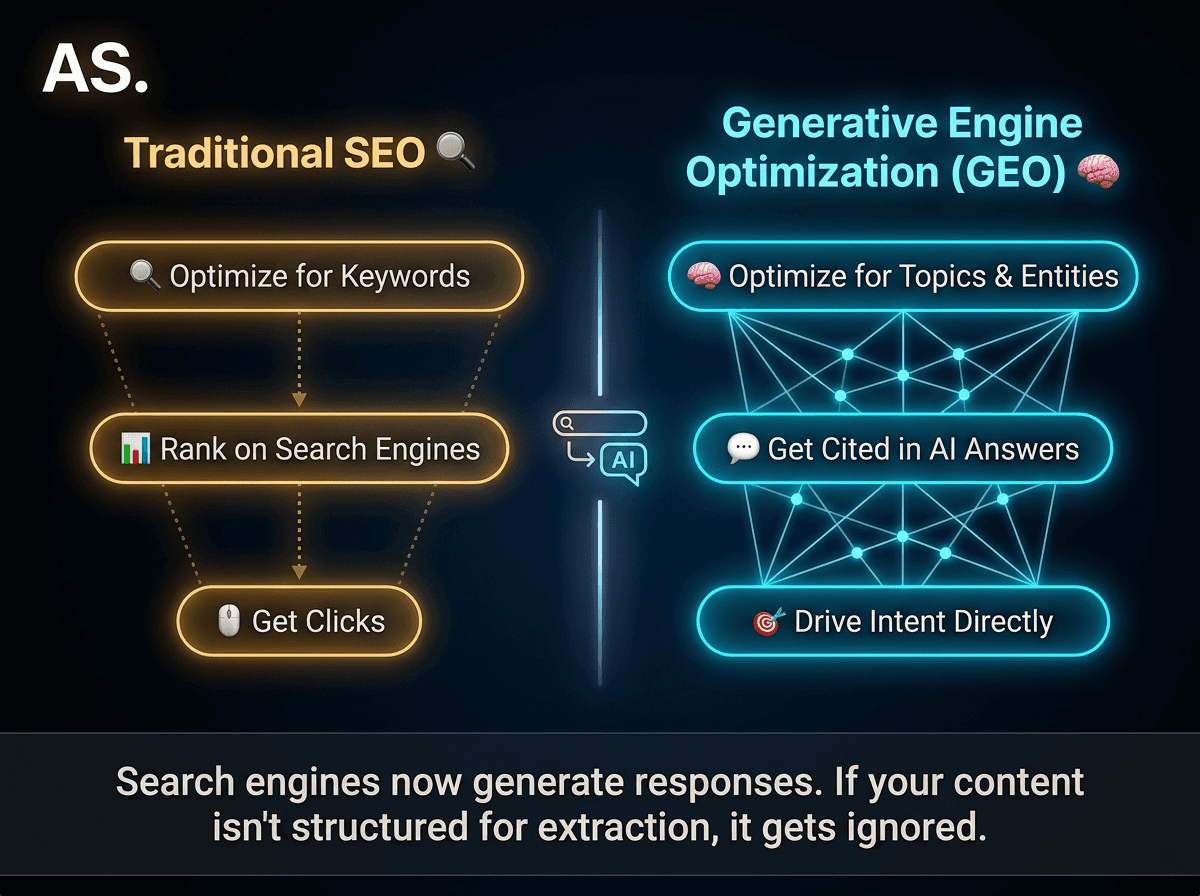
Let’s make this simple.
Traditional SEO
optimize for keywords
rank on search engines
get clicks
Generative Engine Optimization
optimize for topics and entities
get cited in AI answers
drive intent directly
Search engines now generate responses instead of listing options.
If your content is not structured for extraction, it gets ignored.
If you want a deeper breakdown of how AI SEO and LLM systems actually work in practice, read this: AI SEO Tools and LLM Strategy
How AI Search Systems Work
AI systems do not “rank” pages the way Google used to.
They:
scan multiple sources
extract structured insights
combine them into one answer
This means your content must be:
clear
structured
specific
Messy content does not get picked.
1. Build Topic Clusters, Not Isolated Posts
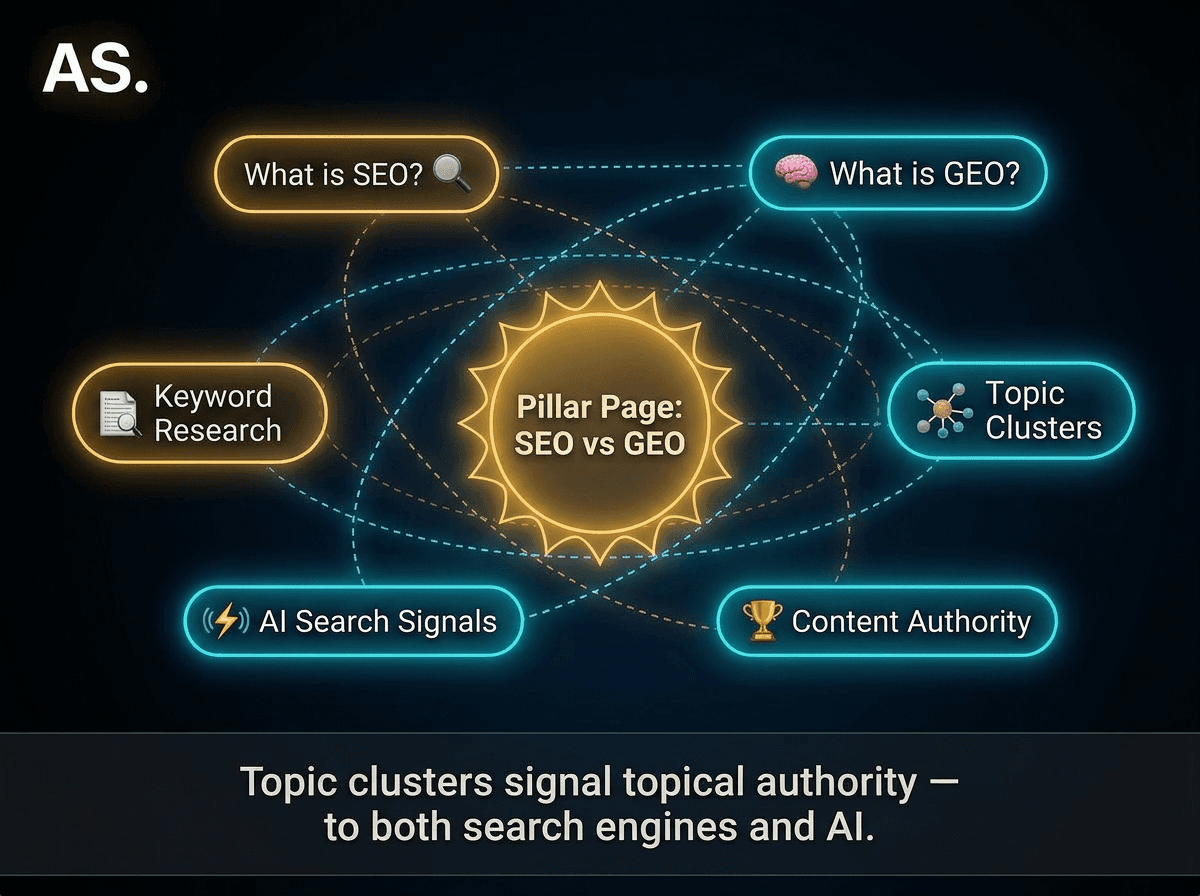
This is the biggest shift.
Stop writing one-off blog posts.
Start building connected topic clusters.
Example:
Instead of:
one post on AI SEO tools
Build:
AI SEO tools
LLM SEO strategy
AI keyword research
content structure for AI
All interlinked.
👉 This is how you build authority.
2. Focus on Entities, Not Just Keywords
Search engines now care about:
what you cover
how consistently you cover it
how deeply you go
Tools like SEMrush help you identify clusters, but the real work is in how you structure content.
What to do:
pick a niche (AI SEO for founders)
cover it from multiple angles
connect everything internally
This builds entity recognition.
3. Structure Content for AI Extraction
AI systems prefer content that is easy to scan and extract.
Use:
clear headings
short paragraphs
bullet points
step-by-step sections
Avoid:
long blocks of text
vague explanations
unnecessary fluff
Example:
Instead of writing:
“AI can improve SEO in many ways…”
Write:
AI helps cluster keywords
AI improves content structure
AI identifies intent
Clear beats clever.
4. Internal Linking Builds Context
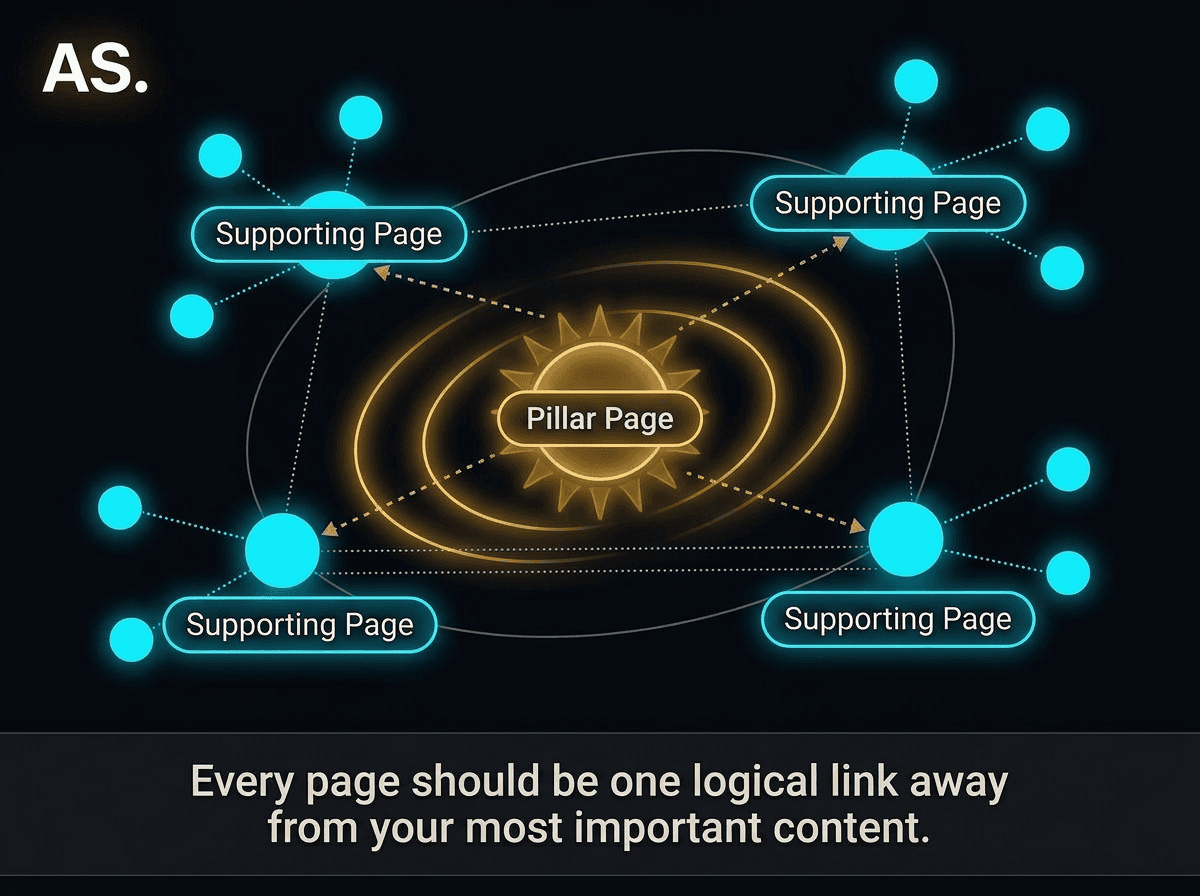
Internal links are not just navigation.
They tell search engines:
👉 what your site is about
Every article should:
link to a pillar page
link to 2–3 related posts
This builds a connected system.
5. Content Must Be Useful, Not Generic
AI systems ignore generic content.
They prioritize:
clarity
usefulness
specificity
If your content sounds like everyone else, it will not be cited.
What works:
practical breakdowns
real workflows
clear frameworks
6. Consistency Builds Authority
One article will not rank.
Ten connected articles might.
Fifty structured articles will.
Simple publishing rule:
1 pillar topic
5–10 supporting articles
strong internal linking
That is enough to start getting traction.
How to Start with GEO (Simple Plan)
If you are starting today:
Choose one core topic
Write one pillar article
Create 5 supporting articles
Link everything together
update monthly
That’s it.
No complex hacks.
The Reality Most People Ignore
SEO is not dead.
It has just changed form.
The winners now are not:
the fastest writers
the biggest publishers
The winners are the ones who:
build structured content
focus on systems
stay consistent
FAQ
What does GEO stand for and what does it mean?
GEO stands for Generative Engine Optimization. It refers to the process of structuring and positioning your content so it gets referenced inside responses generated by AI systems like ChatGPT, Google’s AI Overviews, Perplexity, and other LLM-powered search tools. Unlike traditional SEO — which focuses on ranking in a list of links — GEO focuses on being selected as a source in an AI-synthesised answer. The goal shifts from “rank on page one” to “be cited in the answer itself.”
What is the difference between SEO and GEO in practice?
SEO optimises for search engine crawlers and ranking algorithms — it uses keywords, backlinks, site speed, and page structure. GEO optimises for AI comprehension and selection — it uses entity clarity, direct answers, logical structure, and topical depth. In practice, GEO-ready content tends to also perform well in traditional SEO because the signals overlap: both reward well-structured, genuinely useful, depth-first content. The main difference is that GEO requires you to think about how an AI would extract and summarise your content, not just how a human would read it.
How do I know if my content is being cited in AI-generated answers?
Search for your target topic directly in Perplexity, ChatGPT with browsing enabled, and Google’s AI Overviews, and look for your site in the cited sources. You can also search for your brand name, specific phrases from your content, or distinctive terms you use. Tools like Semrush and Ahrefs are adding AI visibility tracking features. The simplest check: search the question your best article answers, and see whether your site appears in the generated answer.
Build This Properly
GEO is one layer of a larger system. To get cited consistently in AI-generated answers, you also need the entity SEO foundation and the content cluster architecture that makes GEO work at scale. The Complete AI SEO System for Founders covers all three layers together — including a 90-day roadmap for implementing them in the right order.
We help small businesses build:
AI SEO systems
content clusters
automation workflows
Related Reading -