[ News and Blog ]
AI Keyword Research That Drives Leads
|
AI SEO & Search Systems

Arpan Sharma
AI Search & Marketing Systems
Learn AI keyword research for 2026. Discover how to find high-intent keywords, build clusters, and turn SEO traffic into real leads.
Keyword research is broken for most businesses.
They focus on:
search volume
keyword difficulty
And ignore the only thing that matters:
👉 Does this keyword bring a customer?
In 2026, keyword research is no longer about traffic.
It is about intent, structure, and conversion.
Why Traditional Keyword Research Fails
Most keyword strategies look like this:
find high-volume keywords
write blog posts
hope for traffic
Even if traffic comes, it rarely converts.
Why?
Because:
intent is ignored
topics are disconnected
content is not linked to offers
What AI Changes in Keyword Research
AI tools like SEMrush and Google Search Console don’t just give keywords.
They help you understand:
search intent
topic relationships
content gaps
This is the shift:
👉 from keywords → to clusters and intent mapping
1. Start With Intent, Not Keywords
Every keyword falls into one of these:
Informational
User wants to learn
Example: “what is AI SEO”
Commercial
User is evaluating
Example: “best AI SEO tools”
Transactional
User is ready to act
Example: “AI SEO services for small business”
👉 If you ignore this, you get traffic without leads.
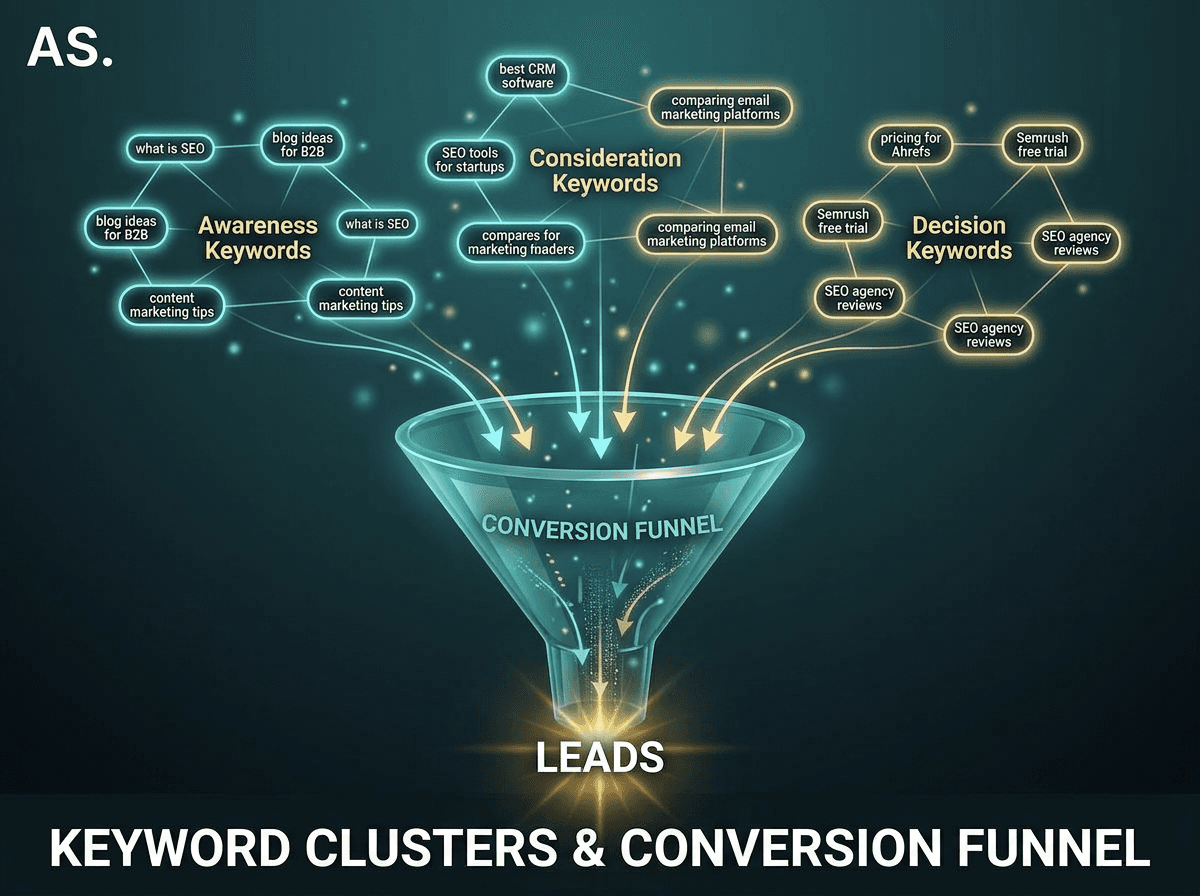
2. Build Keyword Clusters (Not Lists)
Stop collecting keywords.
Start grouping them.
Example cluster:
Core topic: AI SEO
Supporting keywords:
AI SEO tools
LLM SEO strategy
AI keyword research
content optimization with AI
All of these should:
connect
link to each other
support one pillar
👉 This builds authority and improves ranking.
3. Use AI to Find High-Intent Opportunities
Inside SEMrush:
Do this:
search your core topic
filter by:
intent = commercial
KD = under 40
volume = 100–1000
What to look for:
Keywords like:
best tools
comparison
pricing
alternatives
These bring leads.
4. Map Keywords to Your Funnel
This is where most people lose money.
Your content should follow a path:
Awareness
what is AI SEO
how AI search works
Consideration
best AI SEO tools
AI vs traditional SEO
Conversion
AI SEO services
SEO systems for small business
👉 Each stage should link to the next.
5. Turn Keywords Into Content Systems
Do not write isolated articles.
Turn one keyword into multiple assets.
Example:
Keyword: “AI SEO tools”
You create:
blog post
comparison guide
short-form video
LinkedIn breakdown
This multiplies reach and authority.
6. Use Internal Linking to Push Conversion
Every informational article should:
link to a deeper guide
link to a service page
Example:
This article should connect to:
your AI SEO pillar
This turns traffic into action.
7. Track What Actually Brings Leads
Traffic is not the goal.
Leads are.
Use:
Google Analytics
UTM tags
Example:
utm_campaign=ai_keyword_research
Track:
conversions
time on page
click paths
Then double down on what works.
Common Mistakes to Avoid
1. Chasing high-volume keywords
Brings traffic, not revenue.
2. Ignoring intent
Leads to low conversion.
3. Writing disconnected posts
Kills authority.
4. No internal linking
Breaks funnel flow.
Simple Framework You Can Apply Today
pick one topic
identify 10–20 related keywords
group them into clusters
map them to intent
create 5–8 connected articles
link everything
That is enough to build a working system.
Where This Fits in Your Strategy
GEO → explains the shift
LLM SEO → explains selection
AI ranking → explains visibility
This → connects everything to revenue
The Real Advantage
Most businesses still treat SEO as traffic generation.
Very few treat it as a lead system.
That is your edge.
FAQ
What is the difference between traditional keyword research and AI keyword research?
Traditional keyword research focuses on finding terms with high search volume and low competition, then targeting those terms on individual pages. AI keyword research shifts the focus to intent clusters — groups of related questions and topics that together signal authority to both Google and large language models. Instead of optimising one page for one keyword, you build a connected system of content that covers a topic from multiple angles, which is how AI systems determine whether your site is worth citing.
How do I find keywords that bring leads rather than just traffic?
Filter every keyword candidate through one question: what is the person searching for this ready to do? Informational keywords (“what is X”) build awareness but rarely convert directly. Commercial and transactional keywords (“best X for Y”, “hire X in city”) signal purchase intent. Build your content to capture awareness-stage traffic with informational posts, and use internal links to guide those readers toward your commercial and conversion pages — that’s where the lead actually happens.
How many keywords should I focus on per blog post?
One primary keyword and two to four closely related secondary keywords per post. The primary keyword defines what the post is about and should appear in the title, the first paragraph, and at least one H2. Secondary keywords expand the topic naturally and help the post rank for related queries without stuffing. Trying to target more than five distinct keyword intents in a single post fragments the focus and usually means the post would work better split into two or three purpose-built articles.
Build This Properly
Keyword research tells you what to write. A content cluster architecture tells you how to connect it so the whole system compounds. The Complete AI SEO System for Founders shows how keyword planning fits inside a full three-layer AI SEO strategy — from entity signals through to GEO and conversion architecture.
If you want to turn SEO into a system:
We help small businesses build:
AI SEO systems
keyword clusters
conversion-focused content
Related Reading -